Tesla Delivery Day Checklist (2026): Inspect It Right Before You Sign
Tesla sells direct, which means there's no dealer walk-around and no salesperson handing you the keys after a 40-point inspection. On delivery day, you are the inspection. The good news: a careful 30–45 minute check protects you completely, because Tesla covers cosmetic issues only if you report them within 24 hours or 100 miles of delivery. Print this, bring your phone for photos, and don't rush.
Before you leave home
- Confirm your Tesla account shows the correct VIN, color, trim, and options, and cross-check them against your Motor Vehicle Purchase Agreement (MVPA).
- Complete every electronic document in the Tesla app before you arrive — most signing is e-sign, not paper at the lot.
- Download the Tesla app, create your account, and add your phone as a key via Bluetooth.
- If financing through a third party, confirm Tesla has received your check or wire.
- If both owners are on the registration, both must be present to sign.
- Bring a phone charger — you'll be shooting photos for half an hour.
Exterior inspection (do it in direct sunlight)
- Panel gaps: run a finger along every door, hood, and trunk seam. Gaps should be even; uneven gaps mean misalignment.
- Paint: check for chips, runs, orange-peel texture, and swirl marks — especially around handles, mirror bases, and wheel arches.
- Glass: inspect all windows, the windshield, and the roof at an angle for chips or scratches.
- Lights: confirm every headlight, taillight, and marker works, with no moisture inside the lens.
- Wheels & tires: look for curb rash, sidewall bubbles, uneven tread, and missing center caps.
- Doors, frunk, trunk: open and close everything; listen for squeaks and check the latches seat smoothly.
- Charge port: open and close it; check for paint chips around the door.
- Emergency releases: Tesla uses electronic latches — find the manual release and confirm it moves freely.
Interior inspection
- Seats & belts: check for tears and stains; confirm heaters/coolers work; tug each belt to test the retractor.
- Trim & dash: no bubbling, cracking, or misaligned panels; test the soft-close console lid.
- Climate: run heat, A/C, and front/rear defrost through all fan speeds.
- Ports & charging pad: test every USB-C port and the wireless charger.
- Audio: pair your phone and play through every speaker, listening for rattles.
- Windows & roof: cycle all four windows; open and vent the panoramic roof.
Technology and software
- Reboot the screen: hold both scroll wheels ~5 seconds; confirm it boots cleanly and responds across the full display.
- Cameras: open Controls > Service > Camera and confirm all eight feeds are live with no error flags; check the backup camera for dead pixels.
- Features: if you paid for FSD, verify it's active in your Tesla account under Features.
- Software: check Controls > Software for a recent version and Wi-Fi connectivity.
- Dashcam/Sentry: if a USB drive is in the glovebox, confirm Dashcam shows "Recording" in the status bar.
Paperwork and adapters
- J1772 adapter: included with delivery — confirm it's in the car (usually the trunk cubby or frunk). It lets you charge at non-Tesla Level 2 stations.
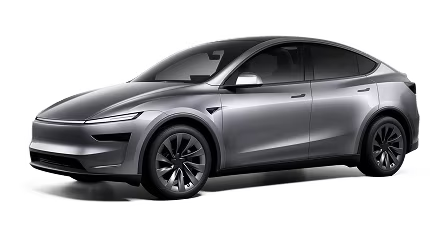
- Mobile Connector: the 2026 Model Y includes the bundle (20' cable, 5-15 and 14-50 adapters); Model 3 and others generally don't — it's a $300 add-on.
- Temporary registration: Tesla provides a paper operating permit; permanent plates arrive by mail in 2–8 weeks, and Tesla usually files with your DMV electronically.
The 24-hour / 100-mile rule
This is the part that matters most. Cosmetic defects — paint chips, panel misalignment, glass chips, interior scratches — must be reported within 24 hours or 100 miles of delivery, or Tesla may decline to cover them. Take timestamped photos of anything you find at the delivery center and have your advisor note visible issues before you drive off. You can refuse delivery outright for significant structural or mechanical problems; minor cosmetic items can be accepted and scheduled for a later service visit.
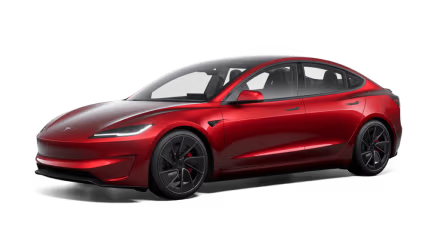
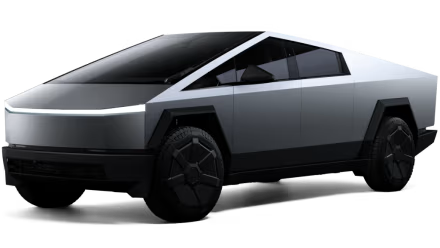
Model notes: Model S/X have different door mechanisms (falcon-wing doors on the X) and a larger frunk to add to the exterior check. On Cybertruck, the stainless panels don't chip like paint, but inspect the exoskeleton for dents, weld quality, and tonneau-cover operation.