Tesla vs Gas Cost Calculator
The real total cost of ownership — financing, charging, insurance, depreciation, your state's EV fees, and any state credits, all included and auto-tuned to your state. Sourced 2026 figures, year by year — and it tells you honestly when gas actually wins. It's an electric-car-vs-gas calculator at heart; Tesla is the default since it's the best-selling EV.
Loading calculator…
⚠️ Estimates only — not financial advice. Every figure is an approximation built from assumptions and third-party averages that change often and may be out of date or wrong. Verify the numbers that matter with the manufacturer, your lender, insurer, utility, and tax authority before you decide. Use is at your own risk under our Terms.
⚡ Test drive or buy a Tesla
Order through our referral link for 3 months of Full Self-Driving free (or $400 off Tesla solar), or book a free demo drive first — straight from Tesla, at no extra cost to you.
 Tesla Model 3
Lease for $329/mo.
Order via referral →
Tesla Model 3
Lease for $329/mo.
Order via referral →
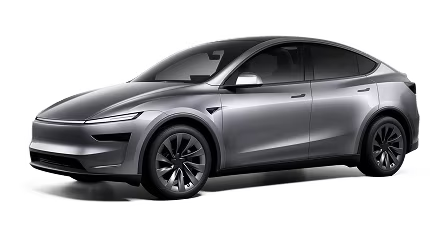 Tesla Model Y
Best-selling crossover — the #1 vehicle worldwide.
Order via referral →
Tesla Model Y
Best-selling crossover — the #1 vehicle worldwide.
Order via referral →
 Cybertruck
Best-selling EV truck.
Order via referral →
Cybertruck
Best-selling EV truck.
Order via referral →
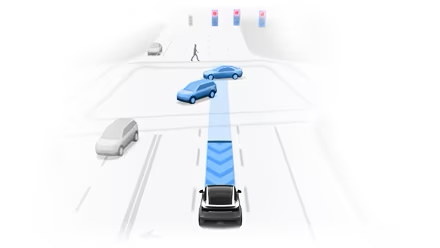 Free Demo Drive
Feel the instant torque & try FSD.
Book a demo drive →
Free Demo Drive
Feel the instant torque & try FSD.
Book a demo drive →
Referral perks & demo drives are offered by Tesla and change periodically (current as of 2026) — confirm the live offer at checkout.
Tesla Owner Essentials
The accessories new owners add first — curated, updated to current Amazon best-sellers.
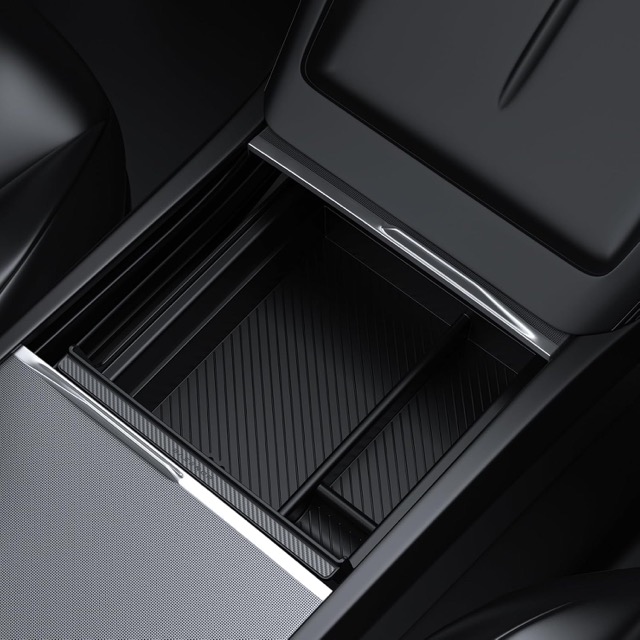 BASENOR Hidden-Drawer Console Organizer
$25–45
OEM-fit drawer slots under the screen to create a hidden compartment for sunglasses, cards, and cables.
Shop on Amazon →
Tesla Key Card Holder Case
$8–12
Slim case that keeps the Tesla key card from cracking or going missing. Also fits Cybertruck and Rivian cards.
Shop on Amazon →
BASENOR Hidden-Drawer Console Organizer
$25–45
OEM-fit drawer slots under the screen to create a hidden compartment for sunglasses, cards, and cables.
Shop on Amazon →
Tesla Key Card Holder Case
$8–12
Slim case that keeps the Tesla key card from cracking or going missing. Also fits Cybertruck and Rivian cards.
Shop on Amazon →
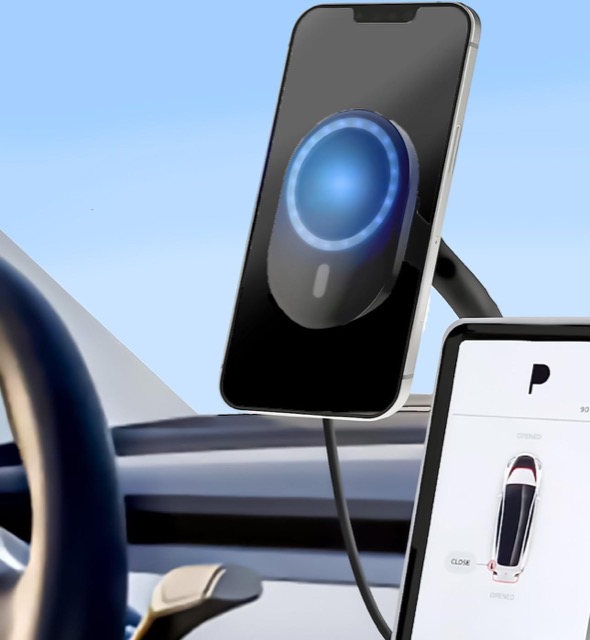 GALVANOX MagSafe Phone Mount + Charger
$30–50
N52 magnets grip any iPhone or MagSafe case to the screen edge and add wireless charging without blocking the display.
Shop on Amazon →
GALVANOX MagSafe Phone Mount + Charger
$30–50
N52 magnets grip any iPhone or MagSafe case to the screen edge and add wireless charging without blocking the display.
Shop on Amazon →
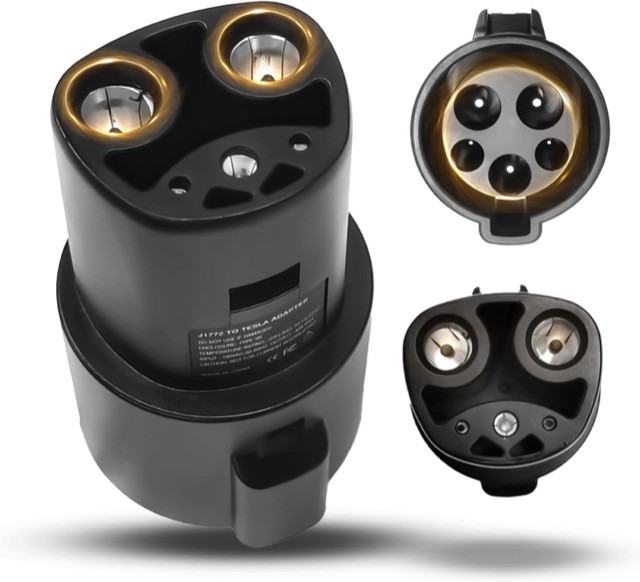 Wigoo J1772 → Tesla Charging Adapter
$28–45
New Teslas now include a J1772 adapter — grab this UL-certified 80A spare only if you want a backup, lost yours, or keep one at a second location.
Shop on Amazon →
Wigoo J1772 → Tesla Charging Adapter
$28–45
New Teslas now include a J1772 adapter — grab this UL-certified 80A spare only if you want a backup, lost yours, or keep one at a second location.
Shop on Amazon →
 BASENOR Seat-Back Kick Mats (Set of 2)
$30–50
Waterproof microfiber-leather panels cover the full rear of both front seats — keep kids' shoes off the leather.
Shop on Amazon →
AstroAI L7 Cordless Tire Inflator (150 PSI)
$20–30
Pocket-size cordless inflator that tops up a low tire without a trip to the gas station. The Model Y doesn't come with a spare.
Shop on Amazon →
PUOENI Rear Trunk Storage Bins (2-Pack)
$60–70
Two lidded, waterproof bins shaped for the 2025–2026 Model Y rear trunk, so groceries and gear stop sliding around. (Not for the 6-seat Model YL.)
Shop on Amazon →
ESR MagSafe Wallet (5-Card)
$12–16
Snaps onto the back of your iPhone and holds your Tesla key card plus up to four more, so the card is always with your phone.
Shop on Amazon →
Apple Watch Series 12
$389+
Apple's newest watch doubles as your Tesla key: lock, unlock and drive from your wrist with the Tesla app on watchOS (Series 6 or later supports it).
Shop on Amazon →
BASENOR Seat-Back Kick Mats (Set of 2)
$30–50
Waterproof microfiber-leather panels cover the full rear of both front seats — keep kids' shoes off the leather.
Shop on Amazon →
AstroAI L7 Cordless Tire Inflator (150 PSI)
$20–30
Pocket-size cordless inflator that tops up a low tire without a trip to the gas station. The Model Y doesn't come with a spare.
Shop on Amazon →
PUOENI Rear Trunk Storage Bins (2-Pack)
$60–70
Two lidded, waterproof bins shaped for the 2025–2026 Model Y rear trunk, so groceries and gear stop sliding around. (Not for the 6-seat Model YL.)
Shop on Amazon →
ESR MagSafe Wallet (5-Card)
$12–16
Snaps onto the back of your iPhone and holds your Tesla key card plus up to four more, so the card is always with your phone.
Shop on Amazon →
Apple Watch Series 12
$389+
Apple's newest watch doubles as your Tesla key: lock, unlock and drive from your wrist with the Tesla app on watchOS (Series 6 or later supports it).
Shop on Amazon →As an Amazon Associate, TeslaBytes earns from qualifying purchases. Prices and availability shown on Amazon.
What this Tesla cost-of-ownership calculator actually includes
Most "Tesla savings" calculators only compare fuel to electricity and stop there — which is exactly how you get a rosy number that real ownership never matches. This one models the full total cost of ownership (TCO) for a Tesla versus a comparable gas car, year by year, and tells you the break-even year — the point where the Tesla becomes the cheaper car to own once everything is counted.
Is this an EV vs gas calculator, or just Tesla?
Both. At heart it's an electric car vs gas cost calculator — the underlying math (cheap home electricity vs gasoline, far lower EV maintenance, state EV fees, depreciation, insurance) is the same for any electric car. Tesla is the default because it's the best-selling EV and the one most people cross-shop against a gas car, but the comparison framework is the same whatever EV you're weighing. New to the question? Start with our plain-English EV vs gas cost comparison, then run your exact numbers in the calculator above.
The line items competitors leave out
- The $7,500 federal EV credit is gone. It was terminated on September 30, 2025. We default it to $0 — if a calculator still auto-applies it, its numbers are out of date.
- Most states charge EVs an extra fee: a yearly registration surcharge a gas car doesn't pay — from about $50 to $200+ depending on your state (and a few, like Texas, add a one-time ~$400 fee). The calculator loads your state's automatically.
- Insurance. Teslas typically cost more to insure than an equivalent gas crossover — we model the gap.
- Depreciation, front-loaded. New cars lose the most value in year one (Teslas especially), so we use a realistic curve, not a flat average.
- Financing. Tesla's low promotional APR vs a typical gas-car loan rate changes the math a lot — both are editable.
- FSD as a subscription. Full Self-Driving is now $99/month, not a one-time purchase. Toggle it in.
Two things this calculator does that no other one does
Real-bill charging cost. Your true cost to charge at home is the marginal rate — energy charge plus delivery charge — not a flat national average. Enter your actual rate for an honest charging number.
Time-value of maintenance. Gas cars don't just cost money to maintain — they cost hours (oil changes, inspections, waiting rooms). Turn on "value my maintenance time" to price those hours at your wage. EVs barely have any.
How break-even is calculated
We compute each vehicle's true net cost of ownership through every year: depreciation plus financing interest plus running costs (energy, maintenance, insurance, fees), minus the resale value you'd recover if you sold. The break-even year is when the Tesla's net cost drops at or below the gas car's. Because the Tesla usually costs more up front but less to run — and holds its value differently — the crossover is the number that actually matters.
Honest by design: at low mileage, with no incentives and steep first-year depreciation, a cheap efficient gas car can win — and this calculator will tell you so. See the full methodology and sources →
Tesla cost by state
Gas, electricity, EV fees, sales tax, and insurance vary a lot by state. Compare Tesla vs gas cost by state → — or jump straight to California, Florida, New York, or Washington, each with a calculator preloaded for that state.
Related guides
- EV vs gas: are electric cars really cheaper to own?
- EV vs gas cost per mile, explained
- When does a Tesla pay for itself vs gas?
- Is a Tesla worth it in Texas in 2026?
- Tesla Model Y vs gas SUV: 8-year cost
- The $7,500 EV credit is gone — does a Tesla still pay off?
- Tesla charging cost: home vs Supercharger
- All Tesla cost guides →
More Tesla tools
- Tesla lease payment estimator — current offers with an interactive down-payment estimator.
- Tesla charging time calculator — how long to charge at home, and what it costs.
- Tesla depreciation & resale estimator — what your Tesla may be worth down the road.
- Tesla referral link & current discounts — order a new Tesla through our link to claim Tesla's latest new-buyer perk.
- All Tesla tools →