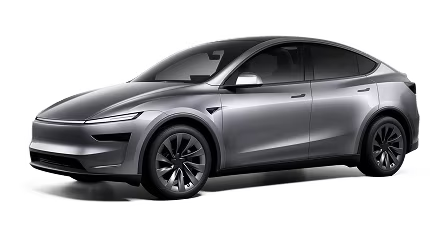
EV Tax Credit Gone: Is a Tesla Still Worth It Without the $7,500?
For years, the easy answer to "should I buy a Tesla?" leaned on a single line item: a $7,500 federal tax credit that knocked thousands off the effective price. That era is over. The federal clean-vehicle credit under IRC 30D was terminated on September 30, 2025 as part of the One Big Beautiful Bill Act. As of today there is no $7,500 federal credit on a new Tesla. The default is $0.
So the real question shifts from "how big is the discount?" to "does the lifetime math still work without one?" The short version: often yes, but the margin is thinner, and a few buyers are genuinely better off in a gas car. Here is how the numbers move.
What the lost credit actually changes
The credit never lowered a Tesla's sticker price; it came back as a tax benefit after purchase. Removing it raises your real, out-the-door cost by up to $7,500. On a Model 3 Standard RWD around $36,990, that is the difference between a smart value and a coin flip against a well-equipped gas sedan. On a Model Y Long Range AWD near $48,990, it pushes the break-even point with a comparable gas crossover several years further out.
The good news is that the credit was only ever one piece of total cost of ownership. The structural advantages of an EV did not disappear when the credit did.
The math that still favors a Tesla
Three recurring costs continue to tilt toward electric, and they compound every year you own the car:
- Fuel. Nationally, regular gas runs about $3.42/gallon while home electricity sits near $0.154/kWh. Charging a Model 3 at roughly 243 Wh/mi at home is dramatically cheaper per mile than feeding a gas tank, especially at the US average of about 13,500 miles a year.
- Maintenance. EVs average around $0.052/mile versus roughly $0.074/mile for gas. No oil changes, no timing belts, and regenerative braking that spares the brake pads. Over 100,000 miles that gap is real money.
- Financing. Tesla almost always has a low promotional APR running on the Model 3 and Model Y — frequently as low as 0–0.99%. Because Tesla sells direct with no dealerships, it prices and discounts its cars more like consumer electronics than traditional autos, so these offers come and go — and they tend to be most aggressive near the end of a quarter, when Tesla is pushing to hit delivery targets. Catch one and the cheap money offsets a meaningful slice of the missing federal credit, something a typical market-rate gas-car loan won't match.
Depreciation also leans slightly EV-friendly: Teslas have averaged about 40% loss over five years versus roughly 45% for the average gas car. New cars of every kind lose the most in year one, so this is a secondary factor, not a headline.
Where gas can still win
We are not going to pretend the answer is always a Tesla. A few situations genuinely favor staying gas:
- State EV fees. Many states charge EV owners a fee gas cars don’t — Texas, for example, $400 at registration plus $200 every year afterward. Gas cars do not pay this. Over a long hold, that annual $200 chips away at the fuel savings.
- Higher insurance. Insuring an EV tends to run about 15-25% more than a comparable gas car, and Teslas specifically skew higher. Get a real quote before you commit.
- Low annual mileage. Fuel and maintenance savings are per-mile. Drive far below average and the upfront premium takes much longer to earn back.
- Road-trip charging. Supercharging at roughly $0.42/kWh costs far more than home charging. If most of your miles are long highway trips on the network, your effective fuel savings shrink.
- The least efficient models. A Cybertruck AWD at about 429 Wh/mi and a near-$80,000 price is a different value proposition than a $36,990 Model 3.
Also worth noting: many state EV rebates are closed — Texas's $2,500 TCEQ program, for example, is exhausted — so do not pencil one in either. And Full Self-Driving is now subscription-only at $99/month, not a one-time add-on, which changes how you budget for it.
How to actually decide
Because the post-credit math is closer, generic advice is worth less than your own numbers. Your mileage, electricity rate, insurance quote, and how long you plan to keep the car can flip the answer entirely. Plug your real figures into our Tesla cost calculator to see the year-by-year crossover point against a specific gas car. If you want to understand exactly which costs we include and the assumptions behind each line, the methodology page lays it all out.
The headline takeaway: losing the $7,500 credit did not break the case for a Tesla, but it did remove the cushion that used to make the decision automatic. For an average-mileage driver with home charging and Tesla's promo financing, an efficient Model 3 or Model Y still tends to come out ahead over the life of the car. For a low-mileage Texan facing the $200 annual EV fee, higher insurance, and frequent Supercharging, gas can quietly win.
Stop guessing and run your own scenario. Open the free Tesla vs. gas cost calculator, enter your miles, your electricity rate, and the exact gas car you would buy instead, and let the numbers tell you whether a Tesla still pays off for you in 2026.