Is a Tesla Worth It in Texas in 2026? The Honest Total Cost of Ownership
Two things changed the math for Texas drivers this year, and both work against the electric car. The $7,500 federal EV tax credit (IRC 30D) was terminated on September 30, 2025 — it simply does not exist anymore, so the default discount is $0. At the same time, Texas charges electric vehicles a registration surcharge of $400 up front plus $200 every year, a fee gas cars never pay. So is a Tesla still worth it in Texas in 2026? The honest answer is: it depends almost entirely on how many miles you drive. Below is the real total cost of ownership, with the cases where gas still wins called out plainly.
Where a Tesla Saves You Money in Texas
The Tesla's edge is in running costs, and it's genuine. Texas residential electricity averages about $0.154/kWh — well below the U.S. average of roughly $0.177 — while regular gas sits near $3.42/gallon. Charging a Model 3 Standard RWD (about 243 Wh/mi) at home costs roughly four to five cents a mile. A comparable gas sedan getting 30 MPG burns closer to eleven cents a mile. Over 13,500 miles — about the U.S. average — that's usually a few hundred dollars a year in fuel savings, and it grows if you drive more or if gas climbs.
Maintenance tilts the same way. EVs run around $0.052/mile versus about $0.074/mile for gas cars — roughly half. No oil changes, no timing belts, fewer brake jobs thanks to regenerative braking. That's another few hundred dollars a year that quietly accrues. Resale cuts the other way, though, and it's worth being honest about: a Model Y now depreciates a bit faster than the average gas car — roughly 50–55% over five years versus around 42–45% — after Tesla's price cuts pulled used values down. It still holds value better than most other EVs, but the resale side of the ledger now leans slightly toward gas, which is why the running-cost savings have to do the heavy lifting.
Where the Costs Bite Back
This is the part dealers and EV cheerleaders skip. In Texas, three costs eat into the savings:
- The EV registration fee: $400 the first year and $200 every year after. Over five years that's $1,200 a gas owner never spends.
- Insurance: EVs run roughly 15-25% more to insure than a comparable gas car, and Teslas specifically tend to land at the higher end. That premium gap can offset much of the fuel savings for a low-mileage driver.
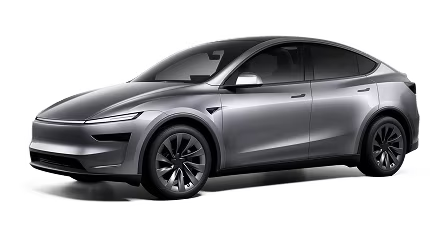
- No federal credit: With the $7,500 gone and the Texas TCEQ $2,500 rebate closed (funds exhausted), the sticker price is the price. A Model Y Long Range AWD starts around $48,990; a Model 3 Standard RWD around $36,990; the Cybertruck AWD around $79,990.
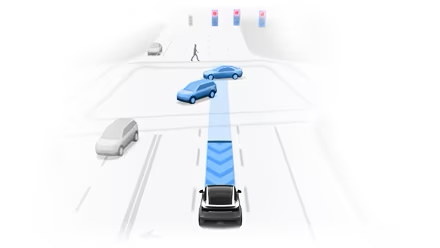
One more wrinkle: Full Self-Driving is now subscription-only at $99/month — the one-time purchase ended in February 2026. If you want FSD, budget nearly $1,200 a year for it, and it counts against the Tesla in any honest comparison. The bright spot is financing: Tesla's promotional 0–0.99% APR on the Model 3 and Y (through June 30, 2026) keeps interest costs near zero, which meaningfully helps the total.
The Verdict by Mileage
Total cost of ownership comes down to one question: how far do you drive?
- Low mileage (under ~8,000 mi/yr): Gas often wins. The $200 annual EV fee and higher insurance can swallow the fuel savings, and break-even stretches out for years. A garaged second car or a short-commute driver may not recover the premium.
- Average mileage (~13,500 mi/yr): It's close and depends on your insurance quote and home electricity rate. Charge at home, skip the FSD subscription, and the Tesla usually pulls ahead over a typical ownership period — but it's a multi-year payoff, not instant.
- High mileage (18,000+ mi/yr): The Tesla wins clearly. Fuel and maintenance savings compound fast and outrun the fixed fees. Heavy commuters and rideshare-style drivers see the strongest case.
Two cautions that swing the result: Supercharging at roughly $0.42/kWh costs far more than home charging — if you can't plug in at home, much of the fuel advantage evaporates. And new cars lose the most value in year one, so buying near the top of the lineup (a loaded Model Y or a Cybertruck at ~429 Wh/mi, the least efficient Tesla) front-loads depreciation that takes longer to earn back.
Run Your Own Numbers
Averages are a starting point, not your answer. Your commute, your electricity plan, your insurance quote, and whether you finance all move the break-even year. Plug your real figures into our Tesla vs gas cost calculator to see a year-by-year total cost of ownership for your situation — including the Texas EV fees, any state credits, and FSD if you want it. Curious how we model depreciation, energy, and fees? It's all laid out in our calculator methodology, with nothing invented and nothing hidden.
Bottom line: In 2026 Texas, a Tesla is worth it for most average-to-high-mileage drivers who charge at home — just don't expect the instant slam-dunk the $7,500 credit used to provide. Before you buy, run your exact miles, rate, and trim through the calculator and let the numbers — not the hype — make the call.