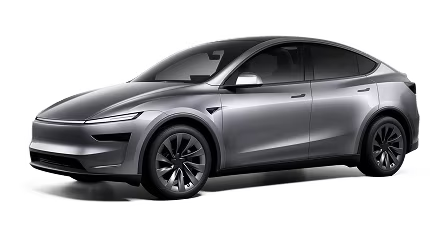
Tesla Model Y vs Honda CR-V Cost: At What Mileage Does the EV Win?
These are the two crossovers America actually cross-shops. The Honda CR-V is the gas-SUV default — practical, efficient for its class, and famously cheap to own. The Tesla Model Y is the best-selling EV that keeps poaching CR-V buyers. They look like rivals, but on price they start from very different places, and the real question isn't which sticker is lower — it's how many miles it takes for the Model Y's cheap electrons to overtake the CR-V's cheap entry price. Here is the honest 2026 math, line by line.
The Sticker Gap Is Large — and No Longer Cushioned
The CR-V wins day one on cash. A base CR-V starts around $30,000, but a base CR-V isn't equipped like a Model Y. The trim that matches it — the CR-V EX-L AWD (leather, sunroof, full Honda Sensing) — runs about $37,000, against a Model Y Long Range AWD at $48,990. Feature-matched, that's roughly a $12,000 gap, not the ~$19,000 a base sticker implies. The lever that used to shrink it is gone too: the federal $7,500 EV tax credit was terminated on September 30, 2025. For out-the-door cash, the Honda is still cheaper.
One offset worth knowing: Tesla is running promotional financing as low as 0–0.99% APR on the Model 3 and Model Y through June 30, 2026. If you are comparing monthly payments rather than sticker prices, that rate carries the larger Model Y balance far more cheaply than a typical auto loan, and it changes the comparison more than most shoppers expect.
Where the Model Y Earns It Back: Fuel and Maintenance
The Tesla's entire case lives on the operating side. At roughly 275 Wh per mile and typical home electricity near $0.154/kWh, charging the Model Y at home costs a little over four cents per mile. A gas CR-V at 28–30 mpg combined, burning gas around $3.42 a gallon, costs about 11–12 cents per mile — close to triple. Across the US-average 13,500 miles a year, that is roughly $560 in electricity for the Model Y versus about $1,600 in gas for the CR-V: a fuel saving near $1,000 every year.
Maintenance leans the same direction. EVs average about $0.052 per mile against roughly $0.074 for gas — about half. No oil changes, no transmission service, fewer fluids, and regenerative braking that stretches brake life. The CR-V is one of the least expensive gas SUVs to maintain, so the gap is narrower here than against a luxury car, but the Model Y still comes out ahead — call it a few hundred dollars a year on routine upkeep.
The fine print: this advantage assumes you plug in at home overnight. Lean on Supercharging at around $0.42/kWh and the per-mile energy cost roughly triples, erasing most of the fuel edge. Home charging is the whole ballgame.
Where the CR-V Claws Back: Insurance and EV Fees
Two line items keep the race close. Insurance is the first — Teslas typically cost around 15-25% more to insure than a comparable gas vehicle, thanks to higher repair and parts costs, while the CR-V is cheap and easy to fix and is priced accordingly. On realistic owner-paid premiums that works out to roughly $300–400 a year in the Honda's favor — real, but far smaller than the inflated quote-site averages imply.
State EV fees are the second. Texas, for example, levies a surcharge of $400 up front plus $200 every year that a gas CR-V never pays. Over a typical ownership stretch that alone adds well over a thousand dollars to the Model Y's column. Stack insurance and fees together and the Tesla's ~$1,300 annual running-cost advantage shrinks to something closer to $700–$900 net at average mileage.
Depreciation: Closer Than the CR-V's Reputation Implies
Honda resale is legendary, and in 2026 it has the edge on the Model Y. A Tesla now loses roughly 50–55% of its value over five years — a bit more than the ~42–45% an average gas car sheds — after Tesla's price cuts pulled used values down, while the CR-V holds value better than that average. The absolute dollars compound it: about 52% of a $49,000 Model Y is a far bigger cash hit than 45% of a $30,000 CR-V, so the Honda's lower starting price and stronger retention both protect more of your money. Both cars lose the most in year one, so buying lightly used blunts the steepest drop on either side. Our Tesla cost-of-ownership calculator lets you set purchase price and resale assumptions to model a used scenario directly.
So At What Mileage Does the Model Y Win?
This is the heart of the matchup. Against that feature-matched CR-V EX-L AWD, the Model Y's lower running costs recoup its ~$12,000 premium by about Year 2, and over a full eight years the Model Y edges ahead by roughly $9,200 — and the gap widens the more you drive. A CR-V buyer who keeps it only a year or two still comes out cheaper, and a stripped base CR-V stays cheaper for a very low-mileage owner who doesn't need the equipment. But matched trim for trim, with home charging, the Model Y is the cheaper car to own — decisively so for an average or high-mileage driver.
Every figure here — efficiency, electricity and gas prices, the insurance delta, EV fees, and depreciation curves — is laid out in our calculator methodology so you can see exactly how the numbers are built instead of trusting a headline.
Run Your Own Numbers
Your annual miles, your electricity rate, and how long you keep a car swing this verdict more than any sticker price. Drop your real figures into the Tesla vs gas cost-of-ownership calculator and watch the year-by-year lines cross — the exact mileage where a Model Y stops costing more than the Honda CR-V is your number, not ours.