Tesla Model 3 vs Honda Civic Cost in 2026: Can an EV Beat the Cheapest Smart Buy in the Class?
Most Tesla-vs-gas comparisons are lopsided because the gas car is thirsty, unreliable, or both. The Honda Civic is neither. It is cheap to buy, sips fuel at roughly 34 mpg combined, and has decades of bulletproof reliability behind it. That makes the Tesla Model 3 vs Honda Civic cost question one of the genuinely hard matchups — an efficient compact gas sedan against the cheapest Tesla. Here is where each one actually wins once you add up price, fuel, maintenance, fees, insurance, and depreciation.
The Sticker Price Gap Is Wide — and the Old Equalizer Is Gone
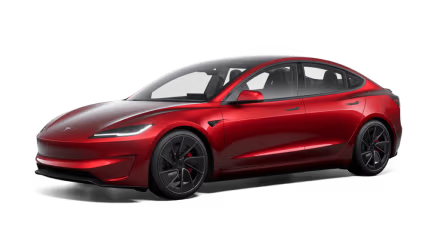
This is where the Civic lands its hardest punch on the sticker. A base Civic LX starts around $25,000 — but that car doesn't remotely match a Model 3 on tech, performance, or interior; a $28k base Civic has almost none of what a Model 3 includes standard. The Civic trim that actually gets close — the loaded Sport Touring Hybrid — runs about $32,300, against a Model 3 Standard RWD at $36,990. Feature-matched, that's only about a $4,700 day-one gap (the base-vs-base gap looks wider, but you'd be comparing two different cars). The federal $7,500 EV credit that used to close it was terminated on September 30, 2025. For the lowest cash outlay today the Civic is still cheaper — just not by as much as a base sticker suggests.
Tesla does offer promotional financing as low as 0–0.99% APR on the Model 3 through June 30, 2026, which lowers the cost of carrying the larger balance. If you compare monthly payments rather than sticker prices, that rate narrows the gap more than most shoppers expect — but it does not erase a five-figure price difference.
Where the Model 3 Claws Back: Fuel and Maintenance
The Model 3's entire case is built on operating costs. At roughly 243 Wh per mile for the Standard RWD and typical home electricity around $0.154/kWh, home charging costs about 4.1 cents per mile. A Civic at 34 mpg on gas near $3.42 per gallon costs about ten cents per mile in fuel — more than double. Over 13,500 miles a year, close to the US average, that is several hundred dollars annually in the Tesla's favor.
Maintenance leans the same way. EVs average about $0.052 per mile versus roughly $0.074 per mile for gas cars — about half. No oil changes, no transmission service, and regenerative braking stretches brake life dramatically. The Civic is one of the cheapest gas cars to maintain, so the gap is narrower here than against a luxury car, but the Model 3 still comes out ahead on routine upkeep.
One important caveat: the Tesla's lowest running costs assume you can plug in at home overnight. If you lean on Supercharging at around $0.42/kWh, the fuel advantage largely evaporates. And a home charger is its own line item — a Tesla Wall Connector is about $475, with installation typically running $1,200–$2,000 all in (more if your panel needs an upgrade). The 30% federal charger credit expires June 30, 2026 and only applies in non-urban or low-income census tracts, so many suburban many homes will not qualify.
The Costs That Favor the Civic
Two line items keep this race close. The first is insurance: Teslas generally cost roughly 15-25% more to insure than a comparable gas car because of higher repair and parts costs. A Civic is cheap and easy to fix, and insurers price it accordingly.
The second is state EV fees. Many states charge a registration surcharge gas cars don't — Texas, for example, $400 upfront plus $200 every year — a cost the Civic never pays. Over a typical ownership span that adds well over a thousand dollars to the Model 3's column. Stack the wider sticker gap, the pricier insurance, and these fees together, and the Civic builds a real lead that the Tesla has to chase down through fuel and maintenance savings.
Depreciation: A Quiet Point for the Tesla
Resale tilts toward the Civic. A Tesla now depreciates roughly 50–55% over five years — a bit more than the ~42–45% an average gas car loses — after Tesla's price cuts pulled used values down. The Civic resists depreciation better than that average thanks to strong demand, so on resale the Honda has a real, if modest, edge here. Because both cars lose the most in year one, buying lightly used blunts the biggest hit on either side. To model a specific used scenario, our Tesla cost-of-ownership calculator lets you set purchase price and resale assumptions directly.
So Which One Wins?
Here's the part that surprises people: with the gap down to about $4,700 once you feature-match the trims, the Model 3's stronger resale, cheaper energy, and skipped oil changes pull it ahead by about Year 2, and over a full eight years the Model 3 comes out roughly $6,600 ahead on total cost — even against a 49-mpg Sport Touring Hybrid, and using realistic owner-paid insurance (a Model 3 runs only a few hundred dollars a year more than a Civic, not the inflated quote-site averages). A stripped base Civic still wins on day-one cash and for a very short hold, but a Civic equipped to match a Model 3 costs more to own.
Every figure above — efficiency, electricity and gas prices, the insurance delta, EV fees, and depreciation curves — is spelled out in our calculator methodology so you can see exactly how the numbers are built instead of trusting a headline.
Run Your Own Numbers
Your annual mileage, electricity rate, and how long you keep a car move this verdict more than any sticker price. Plug in your real figures with the Tesla vs gas cost-of-ownership calculator to see whether a Model 3 or a Honda Civic actually costs you less over the years you plan to drive it — no guessing, just your numbers.