Tesla Lease vs Buy in 2026: Which One Actually Costs You Less?
For most of the last decade, the lease-versus-buy question for a Tesla had a clear thumb on the scale: leasing let you capture the $7,500 federal credit even if you couldn't on a purchase. That lever is gone. The federal clean-vehicle credit under IRC 30D was terminated on September 30, 2025, so neither a lease nor a purchase comes with a $7,500 discount anymore. The default on both is $0. With that equalizer removed, the decision now comes down to three things: Tesla's promotional financing, how depreciation is front-loaded, and how you want to pay for Full Self-Driving. Here is how each one moves the math in 2026.
Financing: the 0–0.99% APR changes everything
Tesla regularly runs very low promotional APRs — often as low as 0–0.99% — on the Model 3 and Model Y, and tends to push them hardest near the end of a quarter as it chases delivery targets. When one of those offers is live, it's the single biggest reason the calculus shifts toward buying. The whole appeal of a lease has always been a lower monthly payment, but that advantage shrinks dramatically when the money to buy is nearly free. A purchase loan at 0–0.99% means almost every dollar you pay goes to principal — equity you keep — rather than to interest or to a leasing company's margin.
A lease, by contrast, bakes in a "money factor" (the lease equivalent of an interest rate) that you rarely see advertised cleanly, plus the lessor's expected depreciation. When buyer financing is this cheap, the lease's monthly-payment edge narrows and you end the term with nothing to show for it. If you qualify for the promo rate, buying is hard to beat on pure cost.
Depreciation: why year one is the trap
Every new car loses the most value in its first year, and that single fact is the strongest argument for leasing. A Tesla depreciates roughly 50–55% over five years — now a bit faster than the ~42–45% a typical gas car sheds, after Tesla's price cuts pulled used values down — and the curve is steepest at the start. That steep, front-loaded drop is exactly the cost a lease lets someone else absorb.
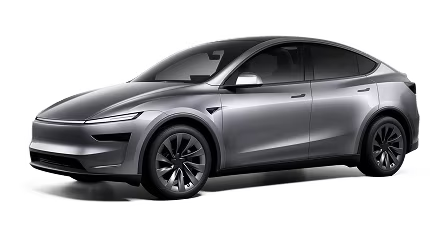
- When you buy, you personally absorb that front-loaded first-year drop. On a Model Y Long Range AWD near $48,990, the paper loss in year one is real money out of your equity, even if you never sell.
- When you lease, the leasing company eats the depreciation. You pay only for the slice of value you use during the term and hand the keys back before the curve flattens out. If you tend to swap cars every two or three years anyway, leasing lets you skip the worst of the depreciation hit on each one.
- The catch: a buyer who holds the car well past the loan keeps driving a paid-off asset for years. That is where ownership pulls decisively ahead — the longer you hold, the more the front-loaded depreciation gets diluted across miles you didn't pay a payment for.
In other words, depreciation favors leasing only if you were going to churn cars anyway. If you keep vehicles a long time, buying wins precisely because you ride out the curve.
FSD is now a $99/month sub — so it's lease-neutral
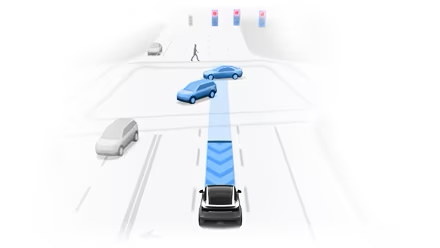
Full Self-Driving used to be a one-time purchase you'd want to spread across years of ownership, which historically nudged people toward buying so they could keep the feature. That changed in 2026. The one-time FSD purchase ended February 14, 2026, and FSD is now subscription-only at $99/month, tied to your account rather than the car. At $1,188 a year, it's a recurring charge you can start and stop at will.
Because FSD no longer lives on the vehicle, it no longer rewards ownership the way it once did and it adds nothing to resale. That quietly removes one of the old reasons to buy. Whether you lease or buy, FSD is the same $99/month either way — budget it as an optional subscription, not as part of the lease-vs-buy decision. For a full breakdown, see whether FSD actually saves money in your own scenario.
The costs both paths share — don't forget these
Some line items hit you regardless of how you finance the car, and they're easy to leave out of a payment comparison:
- State EV fees. Many states charge a registration surcharge gas cars don't pay — Texas, for example, $400 at registration plus $200 every year after. On a lease you'll typically cover the annual fee for the years you hold the car; on a purchase you pay the upfront $400 once and the $200 yearly as long as you own it.
- Insurance. Insuring a Tesla tends to run about 15-25% higher than a comparable gas car. Lessors also usually require higher coverage limits, so leasing can nudge your premium up further. Get a real quote before you sign either way.
- Fuel and maintenance still favor the EV. At home electricity near $0.154/kWh against gas around $3.42/gallon, and EV maintenance near $0.052/mile versus about $0.074/mile for gas, the operating savings land whether you lease or buy. Leases just give you fewer years to bank them.
Who should lease, and who should buy
Lean toward leasing if you trade cars every two to three years, you want to sidestep the front-loaded first-year depreciation, you value always being under warranty, or you're unsure how fast Tesla's lineup and pricing will keep moving. Leasing keeps your exposure short and predictable.
Lean toward buying if you qualify for the 0–0.99% promo financing, you plan to keep the car well past the loan, and you drive enough miles to compound the fuel and maintenance savings. With nearly-free money and a long hold, ownership turns the depreciation curve into your friend and ends with a paid-off car. For the bigger picture on whether the numbers work at all post-credit, read whether a Tesla still pays off for your situation.
There's no universal winner here — your mileage, how long you'll keep the car, your insurance quote, and whether you snagged the promo rate can flip the answer entirely. See the current lease payment for any trim with our Tesla lease payment estimator, plug your real figures into the cost calculator to compare a financed purchase against your driving profile year by year, and check the methodology page to see exactly which costs we include and the assumptions behind each one. Run your own numbers before you sign anything — in 2026, the honest answer is the one that fits how long you'll actually keep the car.