Tesla Battery Degradation & Range Calculator
Wondering how much range is really left in that used Tesla? This estimator turns the best public fleet data — Tesla's own 200,000-mile retention numbers, Recurrent's studies of tens of thousands of real cars, and AAA/DOE temperature testing — into a quick, honest read: pick the exact model and year, enter the odometer, and get an estimated capacity retained, today's EPA-equivalent range, what winter and summer heat do to it, and where the car stands against Tesla's 70% battery-warranty floor. It's a fleet-average estimate, not a diagnosis — packs vary car to car, so before you buy, verify the real number with Tesla's built-in battery health test (how-to below).
—
How this estimate works
- Anchors from Tesla's own fleet data: on average 85% capacity retained at 200,000 miles for Model 3/Y Long Range and 88% for Model S/X (Tesla Impact Report, digitized by InsideEVs).
- Front-loaded curve: the first ~10% of fade arrives by roughly 60–80k miles, then only ~5 more points to 200k. We interpolate linearly between sourced anchors — 5% at 25k (Recurrent's 2–5% "settle-in"), 10% at 70k, 15% at 200k.
- Cross-checked against time: Recurrent measured Model 3 at −8% and Model Y at −6% around 4.1 years (7,000+ and 5,100+ cars); our curve lands within a point at typical 4-year mileage. Vehicle age (taken from the model year) applies that time floor automatically.
- New-range baselines are EPA (fueleconomy.gov, base wheels) — including the 2020 re-ratings, which is why 2019 (240 mi) and 2020 (250 mi) Standard Range Plus are separate picks. Larger wheels rate lower.
- Winter: ~13% loss at freezing with a heat pump (Recharged/Recurrent fleet data, 30,000+ EVs) vs ~24% for the resistive-heated pre-2021 fleet (Recurrent 2022–23 winter study); near 0°F the heat-pump advantage collapses — ~40%/50% (Recurrent; DOE VTO Program Record, Sept 2024).
- Hot weather: 8.5% range loss at 95°F with AC (AAA, May 2026); Recurrent's summer study brackets it at ~5% at 90°F and 17–18% at 100°F. (Heat pumps don't help in heat — no hot-weather bonus is applied.)
- What we don't model: anything past 200,000 miles (no published fleet data), and individual pack history. Tesla's variance band suggests roughly a third of cars could sit below 80% at 200k, and a small 2025 Voltest sample of ten 100k+ mile Model 3 Standard Range cars spanned 71–83% — averages are not guarantees.
- For context only: the all-EV fleet averages 2.3%/yr of fade (Geotab 2025, 22,700 EVs) — every brand, not Tesla-specific, and not used in this estimate.
Estimate only — fleet-average curves, not a diagnosis of any specific car. The dash range display is a BMS estimate, not a measured capacity test; for the real number, run Tesla's built-in battery health test (Controls → Service → Battery Health Test — see below). Battery-warranty claims use Tesla's own measurement, not this estimate. TeslaBytes is not affiliated with Tesla.
Check the real number — Tesla's built-in battery health test
Every Tesla can measure its own pack. The car runs an official capacity test and reports the exact percentage retained versus new — the same style of number this tool estimates. On the touchscreen: Controls → Service → Battery Health Test (recent software also surfaces battery health in the Tesla app). What to know before you run it:
- It's a full drain-and-recharge cycle: the car discharges the pack to ~0% (you'll hear the motors and climate system working), then recharges to 100% and shows the retained-capacity percentage.
- Plan for 12–24+ hours depending on charging speed — start it overnight on a day you don't need the car.
- Requirements: plugged into AC charging (roughly 5 kW or faster — a wall connector or 240V outlet, not a Supercharger), battery at ~20% or lower to start, car in Park, no battery/thermal alerts, no pending software updates.
- Buying used? Ask the seller to run the test before you commit — a fresh, official retained-capacity number beats any estimate, including this one. If they can't, our used-Tesla battery checklist covers what you can verify on a test drive.
Keep going
See what a used Tesla actually costs to own versus a gas car — financing, charging, insurance, depreciation, and your state's fees — in the Tesla vs gas cost calculator, estimate resale with the depreciation estimator, or read how long Tesla batteries really last and whether a used Tesla is the smart buy.
⚡ Test drive or buy a Tesla
Order through our referral link for 3 months of Full Self-Driving free (or $400 off Tesla solar), or book a free demo drive first — straight from Tesla, at no extra cost to you.
 Tesla Model 3
Lease for $329/mo.
Order via referral →
Tesla Model 3
Lease for $329/mo.
Order via referral →
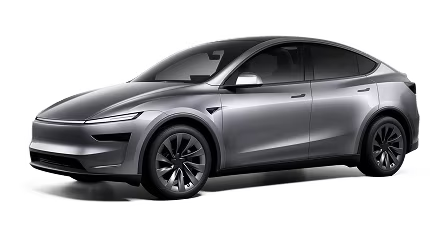 Tesla Model Y
Best-selling crossover — the #1 vehicle worldwide.
Order via referral →
Tesla Model Y
Best-selling crossover — the #1 vehicle worldwide.
Order via referral →
 Cybertruck
Best-selling EV truck.
Order via referral →
Cybertruck
Best-selling EV truck.
Order via referral →
 Free Demo Drive
Feel the instant torque & try FSD.
Book a demo drive →
Free Demo Drive
Feel the instant torque & try FSD.
Book a demo drive →
Referral perks & demo drives are offered by Tesla and change periodically (current as of 2026) — confirm the live offer at checkout.
Tesla owner essentials
Popular add-ons owners grab first — curated picks on Amazon.
As an Amazon Associate, TeslaBytes earns from qualifying purchases. Prices and availability shown on Amazon.