The Cheapest Tesla to Own in 2026 (Owning, Not Just Buying)
Ask which is the cheapest Tesla to own in 2026 and most people answer with a sticker price. But owning a car is a multi-year commitment, and the real cost is the sum of what you pay to buy it, charge it, insure it, register it, and eventually sell it. Sticker price is just the opening bid. Sort by total cost of ownership instead, and one model pulls clearly ahead — the Model 3 Standard RWD — because it wins on the two levers that matter most: a low entry price and class-leading efficiency.
Why the Model 3 Standard leads
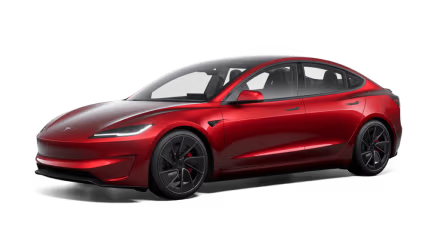
At roughly $36,990, the Model 3 Standard RWD is the cheapest Tesla you can buy, and it backs that up with the best efficiency in the lineup at about 243 Wh/mi and around 321 miles of range. Efficiency compounds: every mile you drive costs less to power, so a low Wh/mi number quietly saves you money for the entire time you own the car. At a typical home rate near $0.154/kWh, 243 Wh/mi works out to about 3.7 cents per mile to charge at home — the lowest energy cost of any Tesla.
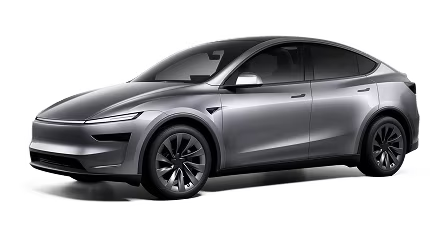
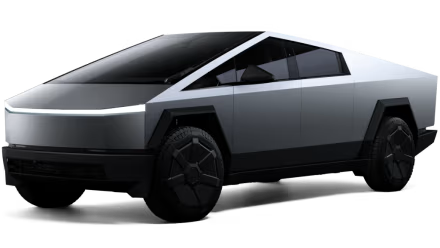
Compare that to the rest of the range. The Model Y Long Range AWD starts around $48,990 and uses about 275 Wh/mi; the Model Y Standard trims the price to roughly $39,990 but still trails the Model 3 on efficiency. The Cybertruck AWD sits at about $79,990 and is the least efficient Tesla at roughly 429 Wh/mi — nearly double the Model 3's energy use per mile. More truck, more money, more electricity, every single mile.
The fees and incentives that changed the math
Two changes reshaped Tesla ownership costs, and both work against the older "Teslas are basically free to run" narrative. First, the federal $7,500 EV tax credit ended on September 30, 2025. It no longer exists, so it cannot offset any Tesla's price in 2026 — mentally delete it from any comparison you read that still includes it. Our Tesla cost-of-ownership calculator defaults that incentive to $0 for exactly this reason.
Second, in the steepest-fee states the cost is real — register in Texas, for example, and every EV pays a $400 surcharge upfront plus $200 every year after — money gas drivers never spend. Over eight years that works out to about $2,000 in fees on top of the purchase ($400 upfront plus eight annual $200 payments). It is a flat cost regardless of which Tesla you pick, but it eats a bigger share of the savings on a cheaper, lower-mileage car, so low-mileage buyers in fee states should weigh it carefully.
Insurance, maintenance, and depreciation
Maintenance favors every Tesla over a gas car: about $0.052/mi versus roughly $0.074/mi, thanks to no oil changes, fewer fluids, and regenerative braking that spares the pads. But maintenance scales with the car, and a cheaper, lighter Model 3 is gentler on tires and components than the much larger Cybertruck, so the Model 3 stays cheapest here too.
Insurance cuts the other way. EVs run about 15-25% more to insure than a comparable gas car, and Teslas specifically sit at the higher end because of repair and parts costs. Premiums scale with vehicle value, so insuring a Model 3 is meaningfully cheaper than insuring a Model Y or a Cybertruck. The cheapest Tesla to buy is also the cheapest to insure.
Depreciation is the biggest line nobody budgets for, and it favors the Model 3 in dollar terms simply because it starts lower. Teslas lose about 40% of value over five years versus roughly 45% for an average gas car. On a $37,000 Model 3, that 40% is about $14,800 gone. Run the same percentage against a $79,990 Cybertruck and you are looking at roughly $32,000 in lost value — more than double, on the same percentage curve. A smaller starting number means a smaller dollar loss.
When a gas car still wins
Owning honestly means saying when the EV does not pay off. If you drive very few miles, can only Supercharge at around $0.42/kWh (which pushes energy cost above 10 cents per mile, near gas-equivalent), or trade cars every two or three years and absorb steep year-one depreciation on a pricier vehicle, a $25,000 Honda Civic at 34 mpg can be the cheaper thing to own outright. The Model 3 rewards home charging, higher mileage, and a longer hold — that is where its low energy and maintenance costs have time to overcome its price premium. For how we build those depreciation curves and energy assumptions, see our calculator methodology.
The bottom line for 2026
Among Teslas, the Model 3 Standard RWD is the cheapest to own in 2026 on nearly every axis: lowest purchase price, best efficiency, lowest insurance, and the smallest depreciation in dollars. The Model Y Standard is the runner-up if you need the extra space and cargo height; the Cybertruck is the most expensive Tesla to own by a wide margin. Note that FSD is now subscription-only at $99/month — over $9,000 across eight years — so leave it out of your baseline unless you will genuinely use it.
Cheapest on paper and cheapest to live with are not always the same answer, and your electricity rate, mileage, and how long you keep the car can swing the total by thousands. Put your real numbers into the Tesla cost calculator to see a year-by-year total for the Model 3 against any gas car you are considering — and confirm which one is actually cheapest to own for you.