Tesla Remote Operators Keep Crashing Its Robotaxis, Data Shows
Federal filings reveal five incidents where human teleoperators caused collisions, contrasting with Waymo’s policy against remote driving.
Tesla’s latest crash reports to federal regulators reveal two additional incidents in which a remote operator, rather than the vehicle’s autonomous system, was driving when the car collided with an object. These filings bring the total number of known crashes involving Tesla’s remote takeover protocol to five, with every recorded instance resulting in contact.
What Happened
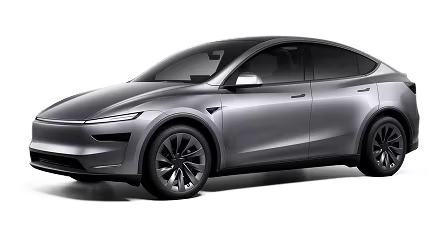
The two new crashes occurred in August and were included in the National Highway Traffic Safety Administration’s (NHTSA) September release of Standing General Order data. This update increases Tesla’s total unique 'Robotaxi' incident reports on file to 36, up from 22 in July. In Dallas, a Model Y was stopped on a residential street between a concrete mixer truck and a parked SUV. Tesla’s report states that a remote support operator took control and, while moving forward, made contact with the SUV at approximately 0.40 mph. No passengers were aboard. In Austin, a remote operator was in control of a Model Y navigating an alley between a utility pole and a dumpster. The vehicle hit the dumpster at about 1 mph, again with no passengers on board.
Why It Matters
Both incidents were property-damage-only collisions at walking speeds, and both were coded by Tesla as 'Remote (Commercial / Test)' operation. This pattern aligns with previous incidents in Houston, Austin, and another in January 2026, where teleoperators took control to assist with navigation or stuck vehicles and subsequently crashed. The data highlights a critical distinction in autonomy strategies: while Tesla allows remote humans to perform the dynamic driving task, competitor Waymo stated in a February 2026 letter to Senator Ed Markey that it does not use remote driving where a human controls the vehicle. Waymo’s remote staff provide guidance that the autonomous system can accept or reject, rather than steering the car directly. Tesla’s reliance on teleoperation raises questions about latency and control precision, as five out of five known remote takeovers in the crash data have resulted in collisions.
The Bottom Line
Tesla’s robotaxi program continues to face scrutiny as federal data shows a consistent pattern of collisions occurring specifically when remote operators assume control. While no injuries have been reported and speeds remain low, the inability to calculate a remote takeover rate due to undisclosed intervention frequency leaves the safety profile of this human-in-the-loop mechanism largely opaque.