Tesla Enables V2H Bidirectional Charging, Europe Completes EV4EU Trial
US-built Model 3 and Y from October 2026 feature Powershare, while EU study validates V2G economic and technical viability.
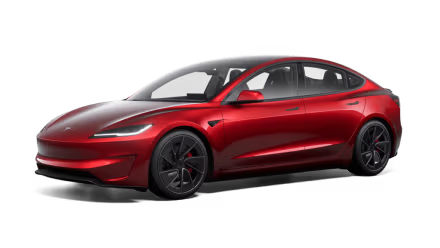
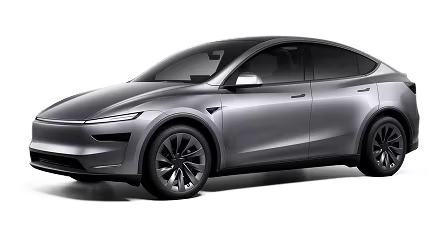
Tesla has enabled vehicle-to-home (V2H) bidirectional charging for US-built Model 3 and Model Y vehicles produced on or after October 1, 2026. This development coincides with the European Union’s conclusion of a four-year study on vehicle-to-grid (V2G) technologies, which demonstrated significant benefits in renewable energy integration and cost reduction.
What Happened
According to Not A Tesla App, every US-built Model 3 and Model Y manufactured on or after October 1, 2026, supports V2H operation via the Powershare feature. Some vehicles built as early as April may also have the necessary hardware installed. Owners can verify compatibility by checking Settings > Software > Additional Vehicle Info for "Powershare Support: Enabled." Unlike Full Self-Driving hardware, which can be upgraded from HW3 to HW4, V2H capability requires specific power electronics that cannot be added via software update to older cars. Tesla has not yet announced a hardware retrofit plan for pre-October 2026 vehicles.
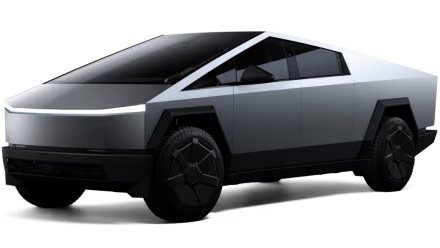
The Powershare system, originally developed for the Cybertruck, allows the vehicle’s battery to power a home during outages. For Model 3 and Y owners, this requires a Powerwall 3 residential storage battery and a Wall Connector or Universal Wall Connector. Unlike the Cybertruck, which can operate without a Powerwall if equipped with a Powershare Gateway, Model 3 and Y users rely on the Powerwall for this functionality. The system delivers up to 11.5 kW of backup power, sufficient to power a residence for approximately two days based on an estimated daily usage of 30 kWh, provided the battery is charged to at least 90 percent.
In Europe, the EV4EU project concluded a four-year study on bidirectional charging. The study successfully tested a fully functional bidirectional charging station prototype using standard combined charging system technology. In Portugal, integrating bidirectional charging points at residences and public buildings resulted in a 14 percent average cost reduction in household charging and a nearly 22 percent increase in renewable energy integration. Other trials in Slovenia, Greece, and Denmark validated the importance of dynamic pricing, flexible capacity contracts, and distributed control algorithms to manage power imbalances and maximize local renewable utilization.
Why It Matters
The activation of V2H in mainstream Tesla models marks a shift in how EVs are viewed by homeowners, moving them from simple transportation assets to critical components of home energy resilience. Colby Hastings, Tesla’s senior director of residential energy, stated that choosing a Tesla is now an investment in home energy resilience, emphasizing the increased value when vehicles and Powerwalls are used together. This capability addresses a common critique of EVs during grid outages, as gas pumps also require electricity to operate, whereas a Tesla with Powershare can provide backup power without a separate generator.
For the broader market, the EV4EU study provides empirical evidence that vehicle-to-grid technologies can be economically and technically viable. The project concluded that bidirectional charging can function as a flexibility option if driver mobility needs and battery ageing are managed through appropriate control algorithms. This challenges previous concerns from Tesla and other manufacturers that V2G operations might significantly shorten battery life, with the study noting that modern batteries often outlast the cars they power. The findings suggest that coordinated communication and suitable market models are essential for scaling V2X solutions.
The Bottom Line
Tesla has enabled bidirectional charging for new US-built Model 3 and Model Y vehicles, requiring a Powerwall 3 for V2H functionality. Simultaneously, the EU’s EV4EU trial has validated the technical and economic potential of vehicle-to-grid technologies, highlighting benefits in cost reduction and renewable energy integration. These developments suggest a growing ecosystem where EVs serve as distributed energy resources, though retrofit options for older Tesla vehicles remain uncertain.