Tesla FSD Avoids T-Bone Crash by Stopping Mid-Intersection
Owner TheNewGrid reported the vehicle braked after another driver ran a stop sign, preventing a collision the human driver missed.
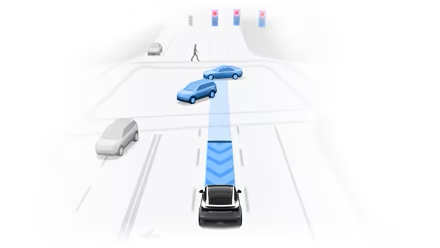
Tesla Full Self-Driving (Supervised) avoided a potential T-bone collision by braking mid-intersection after detecting a vehicle running a stop sign, according to dashcam footage shared by the company on Tuesday.
What Happened
The incident involved an owner posting as TheNewGrid, who described arriving at a stop sign and assuming the oncoming driver would stop. As the Tesla began to cross the intersection, the other vehicle failed to yield. Instead of continuing, FSD applied hard brakes in the middle of the intersection, allowing the crossing vehicle to pass safely. The owner stated that manual driving would likely have resulted in a crash because they did not correct their initial assumption in time. Tesla’s official account shared the clip on X with the caption “FSD Supervised preventing T-bone crash.”
Why It Matters
This event highlights Tesla’s ongoing push to demonstrate the safety advantages of its autonomy stack, particularly as it seeks regulatory approvals in Europe. Tesla claims FSD Supervised is 4.1 times less likely to crash than manual driving across 100 million kilometers in Europe, a figure the company is presenting to regulators. While eight EU countries have approved FSD Supervised, with Croatia being the most recent, the bloc-wide vote originally scheduled for October 6 has been delayed until at least December. The incident also follows recent software updates, including Automatic Collision Evasion in FSD v14.3.9, which can activate FSD if a collision is imminent or the driver is distracted. Ashok Elluswamy, head of Tesla AI, noted that the system reacts to hazards with "super-human response times," while upcoming v15 is expected to further improve hazard prediction and reaction speed.
The Bottom Line
Despite this save, FSD remains a Level 2 system requiring driver supervision. Tesla continues to balance safety demonstrations with regulatory hurdles in the EU, while acknowledging that human intervention is still necessary for complex or edge-case scenarios.