Teslarati Editor Cites Speed Limits and Parking as Key FSD Supervised Hurdles
Despite 76 percent usage, school zone speed compliance and navigation logic still require hard interventions.
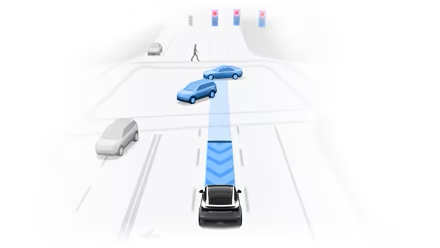
A senior editor at Teslarati reports that while Tesla’s Full Self-Driving (Supervised) suite has achieved high adoption rates in his daily driving, specific edge cases in speed limit recognition, parking selection, and navigation continue to necessitate driver intervention. The editor, who has utilized FSD for approximately 76 percent of his miles since the launch of version 14, details the persistent gaps that prevent the system from moving to an unsupervised state.
What Happened
The editor categorizes interventions into two types: "soft," where the driver adjusts settings like turn signals without disengaging, and "hard," where the driver must take full control due to missed maneuvers or unsafe behaviors. A primary source of hard interventions is speed limit recognition, particularly in school zones. Despite the system generally adhering to limits, the editor notes that FSD frequently fails to slow down to the required 15 mph in school zones, even when set to "Sloth" mode. In one recent instance, the vehicle maintained 34 mph in a zone requiring 15 mph, forcing a complete takeover.
Parking performance has seen significant improvements, with the editor noting that physical maneuvering into spots is rarely an issue on version 14.3.10. However, the decision-making logic for *where* to park remains problematic. The system often selects spots adjacent to other vehicles rather than choosing available spots with buffers, ignoring preferences for distance and safety. Additionally, the navigation system continues to exhibit inconsistent behavior, such as prompting illegal turns out of specific neighborhoods, despite the rollout of "Preferred Routes" in the Summer Update intended to mitigate these errors.
Why It Matters
These recurring issues highlight the remaining barriers to autonomous driving at scale. While FSD v14 has enabled high usage rates among enthusiasts, the necessity for hard interventions in routine scenarios like school zones and parking lot selection indicates that the system lacks the contextual awareness required for true unsupervised operation. For buyers and current owners, this means that while the software is highly capable on highways and standard roads, it still requires active monitoring in complex urban environments and low-speed zones. The lack of granular control over parking preferences and charger selection further complicates the user experience for daily errands.
The Bottom Line
Tesla’s FSD Supervised suite is robust for most driving conditions but still fails to meet the threshold for unsupervised autonomy due to persistent errors in speed compliance, parking logic, and navigation consistency. Drivers must remain ready to intervene, particularly in school zones and tight parking scenarios.