Tesla's Active Robotaxi Markets and Their Actual Sizes
The San Francisco Bay Area offers the largest geofence at 1,098 square miles, while Austin remains the only market with steering wheel-less Cybercabs.
Tesla’s autonomous ride-hailing network has expanded from an experimental pilot in Austin to a commercial footprint spanning seven major metropolitan regions across the United States. Service availability and operational modes vary significantly by location, with some markets fully unsupervised and others still requiring in-vehicle safety monitors.
What Happened
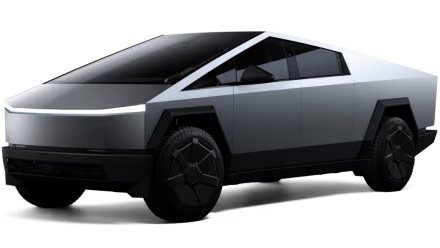
Austin, Texas, serves as Tesla’s flagship proving ground with a geofence covering 246 square miles. This area has grown more than 12 times since the service launched as a beta program in June 2025, when it was limited to 20 square miles. Austin is unique in the network for offering steering wheel-less Cybercabs alongside unsupervised Model Y robotaxis, with Cybercabs providing cheaper per-mile fares in downtown corridors and suburban neighborhoods.
The San Francisco Bay Area in California represents the largest territory by land area, spanning 1,098.4 square miles. The zone extends from Richmond and Berkeley through the East Bay down to San Jose, and across the peninsula to San Francisco, including service to both international airports. Unlike the Texas and Florida markets, California operations are currently limited to Model Y builds with in-vehicle safety monitors, as the California DMV has only granted Tesla a testing permit that requires a driver.
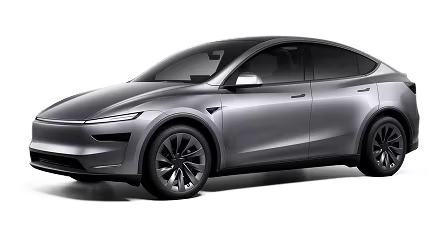
In Texas, Dallas operates a focused 31-square-mile urban pocket centered around Downtown, while Houston covers 25 square miles in the northwest quadrant. Both cities utilize unsupervised Model Y vehicles. The Florida triad includes Miami, which covers 30.8 square miles west of downtown and around the airport; Orlando, with a 26.2-square-mile zone north of the international airport; and Tampa, which spans 23.6 square miles east of Tampa International Airport. All three Florida markets offer fully unsupervised Model Y rides.
Why It Matters
The disparity in operational status and geofence sizes highlights the varying regulatory landscapes Tesla navigates across state lines. While most markets have transitioned to fully unsupervised rides, the requirement for safety monitors in California reflects ongoing regulatory hurdles for commercial driverless operation. The data underscores that Tesla’s current footprint is designed as tight validation perimeters rather than broad coverage, contrasting with rivals like Waymo that have operated for years.
Tesla plans to release FSD v15 to the Robotaxi fleet in October, a software update that introduces a 10-billion-parameter neural network, up from roughly one billion in current branches. This update is expected to unlock 24/7 service hours and serve as the linchpin for scaling the network to dozens of additional markets. Tesla has already begun gearing up for expansion into Las Vegas, Nevada, and Phoenix, Arizona, indicating that current city boundaries are likely to grow outward consistently as real-world commercial miles accumulate.
The Bottom Line
Tesla’s Robotaxi network currently operates in seven U.S. metropolitan areas, with the San Francisco Bay Area holding the largest geofence and Austin offering the most diverse fleet. While most markets are unsupervised, California still requires safety monitors. The upcoming FSD v15 release in October is critical for expanding operating hours and entering new markets like Las Vegas and Phoenix.