Tesla Plans Major Safety Upgrades for Full Self-Driving V15
Tesla AI lead Ashok Elluswamy confirms v15 will feature earlier hazard prediction and faster reaction times.
Tesla is preparing to release significant safety and accident avoidance enhancements with Full Self-Driving (FSD) version 15, the next major iteration of its autonomous driving software. The announcement follows a public comment from Tesla AI lead Ashok Elluswamy, who outlined specific technical improvements expected in the upcoming update.
What Happened
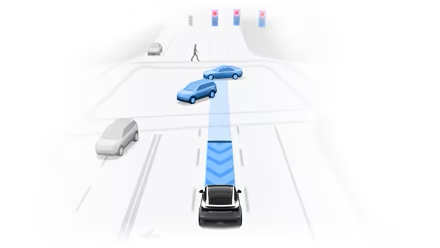
Elluswamy responded to a driver who shared footage of their vehicle narrowly avoiding a collision with another car pulling out of a parking lot. In his reply, Elluswamy stated that FSD v15 would bring "even earlier prediction of hazards, even faster reaction time and overall significantly better safety and collision avoidance." Internally, Tesla describes v15 as a larger architectural step, featuring a much bigger neural network and tighter coupling between prediction and control modules. Early versions of the v15 software are already being utilized in some robotaxi operations.
Why It Matters
For owners and prospective buyers, the move to v15 represents Tesla’s continued strategy of using software as the primary path for safety upgrades. The company is currently rolling out features like Automatic Collision Evasion to customer cars, which allows the driving stack to intervene even when the driver is in manual control. Tesla’s safety argument relies heavily on its published telemetry. Recent North American Vehicle Safety Report data indicates that vehicles with FSD (Supervised) engaged traveled roughly 5.1 million to 5.7 million miles between major collisions, compared to Tesla’s estimate of the U.S. average at about 699,000 miles per comparable crash. However, independent researchers note that when comparing FSD against manually driven Teslas with active safety features, the advantage shrinks to roughly 2.4 to 2.7 times fewer severe crashes. European data from 2026 supports a similar trend, reporting FSD as 3.5 times safer than manual driving in the Netherlands and 4.1 times safer than manually driven Teslas with active safety across more than 100 million kilometers in five approved countries.
The Bottom Line
Tesla positions FSD v15 as a leap in architectural capability aimed at widening the gap between system performance and unaided human driving. While NHTSA data shows Tesla accounting for a large majority of U.S. Level 2 driver-assist crash reports—partly due to the high volume of assisted miles logged—internal comparisons suggest lower rates of automatic emergency braking and harsh maneuvers when FSD is engaged. The upcoming update aims to enhance prediction and collision avoidance further, though the claim remains that software mitigates risk rather than eliminating it entirely.