Elon Musk Responds to Volvo's Decision to Drop LiDAR From EX90 and ES90
Musk pointed to human driving as evidence that cameras and neural networks are sufficient for autonomous vehicles.
Tesla CEO Elon Musk has responded to Volvo's decision to discontinue LiDAR sensors on its EX90 and ES90 vehicles, citing his long-standing position that optical sensors are sufficient for autonomous driving.
What Happened
Volvo announced it would officially scrap LiDAR systems on the EX90 and ES90 after supplier Luminar filed for bankruptcy, ending its ability to supply units. The automaker will phase out data collection via the LiDAR system entirely with no option to remove the unit from vehicles. In Norway, affected owners will receive €1,800 in compensation for features that will never arrive due to this decision. Musk saw the story on X and responded: "I did try to warn them. Humans drive using neural nets and optical sensors. Same is true for robot cars." He has previously called LiDAR "a fool's errand," arguing it is unnecessary for effective self-driving.
Why It Matters
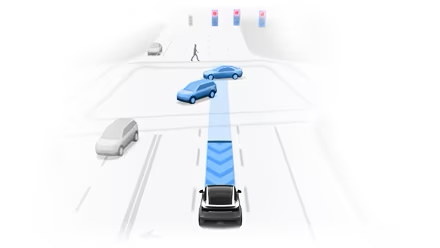
Volvo's move highlights ongoing industry divisions over autonomous vehicle sensor strategies. Tesla has bet on vision-only systems using eight exterior cameras paired with neural network analysis, while competitors like Volvo have relied on LiDAR, radar, and additional sensors. The EX90 and ES90 owners face a tangible loss of hardware capability without removal options, raising questions about how automakers handle supplier disruptions for safety-relevant components.
The Bottom Line
Musk's response reinforces Tesla's commitment to its camera-centric approach to Full Self-Driving, even as other manufacturers continue investing in multi-sensor systems. Whether other companies will adopt Musk's vision-only philosophy remains an open question in the autonomous vehicle industry.