Is Tesla In A Lose-Lose Situation With Autonomous Driving?
Critics argue the company's vision-only approach leaves it squeezed between regulatory pressure and technological limits.
A new analysis questions whether Tesla's bet on pure vision-based autonomous driving has left the company with no good options as regulators and competitors push toward more conservative paths.
What Happened
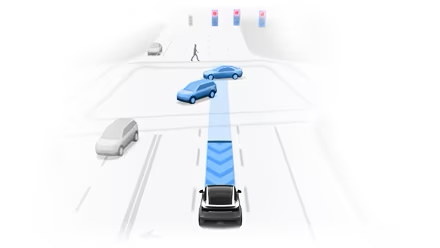
The discussion, published by CleanTechnica, frames Tesla's Full Self-Driving ambitions as a strategic bind. The company has staked its autonomy roadmap almost entirely on camera-based neural networks rather than incorporating lidar or high-definition mapping, a choice that limits performance in edge cases while also drawing scrutiny from safety regulators.
Why It Matters
For current FSD users and prospective buyers, the implications are direct: Tesla owners who paid for the feature expect continuous improvement, but those gains may be harder to realize without either retreating to sensor fusion or accepting slower progress. Meanwhile, competitors using lidar have closed the gap on highway autonomy while avoiding some of the same regulatory questions.
The Bottom Line
Tesla's all-in bet on vision has kept costs down and scaled its data advantage, but it also leaves the company exposed if regulators demand redundant safety systems or if competitors reach comparable capability with less risk. The path forward likely requires compromises that could disappoint purists on either side.